Showing posts with label hobby. Show all posts

Friday, August 10, 2012

National Thoughts -- 2012 Edition

Now that I've returned to civilization and begun adjusting to my regular routine, here's a few thoughts on last week's event in Baltimore:

The best item of the show may not have been a purchase at all...this little item was handed to me by fellow blogger Dave Hornish (the proprietor of The Topps Archives blog).


It's an intact piece of gum from 1946, before Topps even produced cards. One of four different flavors (the others were spearmint, pepsin and cinnamon), it will remain in its present state and take a place of honor in my collection.

Dave wasn't the only fellow blogger to show up, either. Bo -- better known as Phungo -- stopped by the table where I was working and had one of his specially-made packs to give to me. Here are the contents:


Every one of the cards inside has a vintage tie to it. I don't know if that was intentional, but it was definitely appreciated.

I see in his post on The National that I ended up being the only other blogger he ran into. That's a shame, as the Blogosphere is big enough to have a bigger presence at the hobby's premiere event. But I will say this: I agree with his assessment that The National is overwhelming. This was my sixth time at one, and I'll admit that one day there just isn't enough to take it all in.

I picked this up at a table for the outrageous price of $1:


This opened wrapper is from 1979, the first year of baseball cards I collected. I remember opening the yellow wax for what was inside, but it never occurred to me to actually hold on to one for my collection. So that was rectified with this wrapper.

By the way...baseball wasn't the very first thing I collected. That honor goes to Star Wars, which I mentioned here a couple of years back. I even managed to find an unopened item for that part of the collection, too:


That will join my other unopened packs...now that I've completed the base set, I'm no longer tempted to see what is inside these.

On Thursday, I attended the Topps "meet and greet." In the process, I answered four trivia questions and received two boxes of new product and two new specialty cards. Since I really had no use for the newer stuff, they went to kids in the audience (which surprised the Topps execs who watched me do it; they had just asked me nicely if I could keep it off of eBay until the next Wednesday). I did keep one of the items, though:

 
As a Steelers fan, I wasn't about to get rid of this one. Especially something that reminds me that even the Topps executives can get jaded by the actions of hobbyists, and can also act surprised to see a hobbyist just give away a whole box of cards to a kid who might enjoy it more.

I picked up several more cards last week, and I will show them later as I cover some of the sets I feature in the future. If you went and I missed you, hopefully we can cross paths in Chicago next year. If you didn't make it this year, I'd be glad to see you in the future. The National is like Mecca...it's a place that every collector needs to see at least once.

Wednesday, May 2, 2012

A Walk Down Memory Lane

Thanks to fellow collector Mike Borchardt for sharing this little piece of Hobby history.

It's the catalog for The Card Collector's Company and it's from 1963. The pages can be right-clicked and opened in a new window, which makes the text more readable.


The cover page points out that there's some value to the cards. And this was before most of us realized that. So whenever somebody says that collecting was fun in the 1960s or early 1970s because it wasn't so concerned about prices, here's some proof that somebody was profiting in 1963 on them.

That said...$7.50 for either 1951 Topps set? A dollar apiece for '52 high numbers? $18 for a complete '57 Topps set? 


The second page has Bowman sets, plus Fleer/Leaf and football cards. Note here that the only major Bowman card singled out is the 1953 Stan Musial, and that it's worth two of the 1959 Fleer Ted Williams #68s. Also, note that with the 1952 Bowman football cards, the small versions are more expensive than the large ones.


The T206 cards are simply called "1910 Baseball Cards" and are available at 50 cents apiece or 10 for $4.00. That price can include Hall of Fame players as well. 1930s Goudey cards (called "Big League" Baseball cards) are 35 cents each. Also, $27.75 could purchase an entire run of Topps hockey through the 1962-'63 set, and another $11 can secure the last four Parkhurst sets.


This page has Exhibits available (including some Hall of Famers) at 7 cents apiece. Considering they were still being distributed in penny machines, that may seem like a high amount, but the price was for convenience of knowing which player you'd be getting. Also, note that the entire series of the current year (and the stats backs are mentioned) was available for $1.98.


This page has scorecards for the three New York teams going back to the "Dead Ball" era, as well as glossy photographs and Dormand postcards. 


Books about baseball are on this page, but the collector in me focuses on two things: the 1962 Topps All-Star Rookie Award program and the "Baseball Wall Display" that is basically an uncut sheet of cards from the 1961 or 1962 Topps set. I'll mention here that The Card Collectors Company was headed by Woody Gelman, who worked closely with Topps and could easily get uncut sheets whenever he needed them.


While some generic items are mentioned here, I'm looking at the metal cabinet that holds 30,000 cards. I've actually seen some "old school" collectors who've used a similar cabinet to store their collections. $50 (plus shipping) was an awful lot of money in 1963, so they were obviously geared towards the hardcore collectors.


Plastic pages hadn't yet been developed, so there's an ad for "loose leaf" pages that hold four cards and are die-cut to show the back. There's also a copy of the American Card Catalog (then in its final printing) and a host of complete non-sports card sets.

Lastly, Mike even scanned the mailing envelope that held the catalog 49 years ago. Note how the postmark doesn't yet include any ZIP code:


Thanks again, Mike, for that trip into the history of our Hobby.

Wednesday, March 28, 2012

CBS News Says the Hobby is Dying...

This is a piece that CBS News ran over the weekend about our hobby:


I don't entirely agree with the piece. I definitely don't see it in a "death spiral" like the one mentioned there. In fact, I see the "action" has moved away from the shows and on to Internet arenas that allow for a better chance for a collector to find something on his or her wantlist, rather than the show...where a seller has to pay for a table, lug a large inventory that may or may not sell and then haggle over "book" prices we all know are inflated.

Of course, this piece shows absolutely nothing about Online stuff, or auction houses (still doing very well, by the way) or the effect that graded material is having -- SGC is right down the road from where the show in the video above is being held. And the idea of mentioning how the hobby has changed since the early 1990s immediately loses its luster when it ends with a graphic about a card selling for millions just a few years ago (not to mention that another one is currently up for auction).

And I don't know about you, but calling a 1952 Topps Mickey Mantle a "rookie" immediately causes me to discard anything you say after that. CBS's producers shouldn't have to look real hard to find that Mantle was on a nationally-issued card in 1951.

Feel free to comment below about the state of the Hobby.

Friday, January 13, 2012

RIP "Goodie"

While I like to focus on the cards and sets that form the main interest of vintage sports cards, it is impossible to build a Hobby without people. So, when a pioneer leaves us, he deserves mention.

Earlier this month, Goodwin "Goodie" Goldfaden passed away at the age of 97. He was one of the few remaining "old school" dealers who were active before the Hobby; in fact, he was a seller of sports-related memorabilia for more than 80 years.

George Vrechek wrote an article about Goldfaden that appeared a few years ago in Sports Collectors Digest which can be read here. This photo appeared in that column and shows Goodie at a California convention in 1976:


He was one of the first dealers based on the West Coast, and there are some remembrances out there about his small shop on Santa Monica that was only big enough to accommodate a few people at one time. It was remembered that a collector would simply go to the front and tell Goodie what they needed and he would go back into the store and find it.

Though he was one of the early sellers, he didn't seem to consider himself a "pioneer" but simply a businessman. However, his passing still silences the memories of a Hobby back when it was a totally different type of pastime. He'll be missed.

Friday, December 2, 2011

Another Anniversary

I've shown this picture here before:


This was taken on December 2, 1989, exactly 22 years ago. That's me behind the table at a card show, selling what were essentially my own dupes in exchange for money. I took much of that cash and spent it on the tables around me to enhance my own collection. That was the very first show they held in the small Upstate New York town where I grew up; there were several others through 1992 or '93 and I set up at several. I always made back my table money, but most of my profits were sunk right back into the pockets of other dealers.

Doing those shows, I realized that it would be really difficult to be a collector and a successful dealer at the same time. I'm not going to say it's impossible...but it definitely is a tough balance to maintain. This past year, I helped at a seller's table during The National in Chicago. It was the first time I'd been on the other side of the table since those early '90s shows. I remembered a lot of the lessons of my young entrepreneurship, but I also remembered the part about it being difficult to balance a collection with a business. I hope to be behind Irv Lerner's table again in Baltimore next year.

One other thing I see in the picture above is what is gone. That six-pack physique that is under the sweater resembles a case now. The hairline has receded like the value of Mark McGwire's rookie card. Even the finger touching the glass is partially missing, thanks to an on-the-job mishap that included a dog that didn't particularly care for me.

This picture appeared in the weekly paper of my hometown, which I reprinted on my Website. In it, you'll see other reason this particular day was special to me. It was also my 17th birthday.

Monday, November 7, 2011

1942 "Play Ball" Cards

Here are three cards that have found their way into my collection:


They are basic black & white cards and numbered 1, 2 and 3. Here's what the back of Gehrig's card looks like:


The 1976 copyright date allows collectors to realize these aren't really 1942-vintage cards. Rather, the initials HRT and RES were Ted Taylor and Bob Schmeirer, the two promoters of the "Philly Show" during its early days. These cards were designed to promote the shows and were a collectors' only set that imagined what a classic set like Play Ball might have looked like if it weren't for the interruption that World War II caused.

The funny thing about that...is that when I was working at Irv Lerner's table this year at The National, he explained that there actually WERE Play Ball cards in 1942. He said that the final series (#49-72) was printed along with the first 48 cards early in 1942 in order to keep cards on the shelves as the War effort claimed valuable resources that were needed to make gum and cardboard. That's why the high numbers don't have a 1941 copyright, and why some of the low series cards are sometimes found without one.

It's little titbits like that that made working at Irv's table so enjoyable. I consider myself to be fairly knowledgeable about vintage cards, but I realize there are veterans out there who have forgotten more than I could ever hope to know.

Friday, October 21, 2011

2012 SCD Price Guide is Now Ready

The 2012 edition of the SCD "Big Book" is now being sent out to collectors. I mentioned the guide in this blog back in July, when it was still available only as a pre-order item.

I also mentioned that the 2012 edition would be a vintage-only guide that cut off at 1980. This was cheered by vintage collectors but jeered as being "incomplete" by others. I have sympathy for both sides, and personally felt that either a two-volume set or a CD-ROM that would allow the info to easily be loaded onto a computer would have been a better idea.

One more thing: with this edition, long-time editor Bob Lemke has retired. While it'll be weird not to see his name on the cover (he was doing the job when I was a kid and first paid attention to the fact that people were actually writing about the hobby), I'm happy to see that Bob has reached the point in his life where he can just focus on himself. SCD doesn't seem to be in a big hurry replacing him (note to SCD -- I'm available and will consider relocating), so I'm not sure what a 2013 edition will contain.

If you'd like to pick up a copy, Amazon has new copies available cheap:


One thing that has been included is a Hot/Cold list. Here's what SCD has to say about the current state of the Hobby:

HOT
  • Ruth
  • Cobb
  • Gehrig
  • Koufax
  • Clemente
  • Ryan
  • Rare T-card backs
  • T205, T206
  • M101-4, M101-5
  • 1920s Exhibits
  • Bowman
  • 1952 Topps
  • 50s-60s regional issues
  • NM+ cards

NOT
  • Joe Jackson
  • Wagner
  • Young
  • Mantle
  • Aaron
  • Rose
  • E-cards
  • T202, T207
  • 1910-11 Sporting Life
  • 1930s Goudey
  • Leaf
  • non-1952 Topps
  • Latin American issues
  • Collector-grade cards

 I think this is an interesting list. I definitely agree about rare T-card backs simply from my experience working at The National this year, but don't see prices softening on vintage Mantle or Aaron cards. If anybody has anything to say about the list -- good or bad -- feel free to say so in the comment section.

Friday, October 7, 2011

What is This Thing?

Here's something from the "Oddball" section of my collection:


It's interesting to see players from the past in their uniforms, and on fields that didn't get the meticulous treatment that ground crews give today. "Bullet" Joe Bush played for the New York Yankees between 1922 and 1924, which put him on the team when they first occupied Yankee Stadium.

While it looks like it might be an Exhibit card from the 1920s, it isn't. It's a postcard, as you can see from the back:


And right in the corner is a notification that it's a reprint from 1973.

Here's the interesting part...the address in the center is from Amawalk, New York. The collector in me recognizes the city as the home of Mike Aronstein, the founder of TCMA. Sure enough..."The Card Memorabilia Associates" can be shortened to TCMA. That's a new one for me, as I've heard that the acronym stood for the initials of its two founders.

So, this postcard is part of the process that led to the SSPC sets in 1975-'76 and a slew of collector sets into the 1980s.

I've mentioned Mr. Aronstein in this blog before, as one of the sponsors of the 1984 National:


He's the one sitting bottom left.

Friday, September 2, 2011

Old Hobby Stuff

At the National, one of my trading buddies handed this card to me:


It's a postcard-sized advertisement for a card show. As a hobby enthusiast, I think I enjoy the fact that this card survived all these years even more than the fact that it shows two Yankee legends.

It's not a postcard, though. The back had info about the show:


Nearly 37 years ago, sports memorabilia collectors converged in New York City for a weekend to look through stacks of cards and check out other sports-related items. The admission price seems a little high (It only cost $1 to get into the first National in 1980), but the NYC location may have had an influence there. However, considering that a single-day pass at this year's National was $20...it doesn't seem out of sorts today.

One thing I can't get past...the line about the memorabilia spanning 1880-1974. It's odd to think that -- at that time -- 1880 was less than a century before.

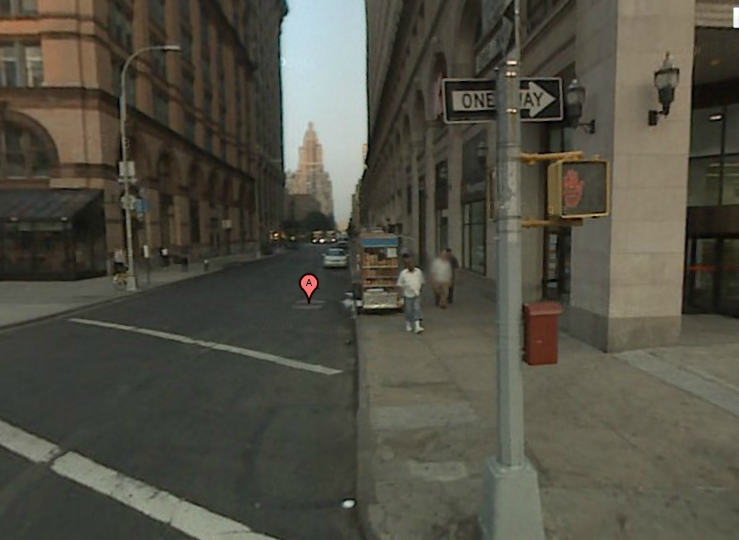
Google Maps shows this image at 140 E. 8th Street in Manhattan:


The show was likely in the building to the right.

Friday, July 22, 2011

The 2012 SCD Price Guide...Some Great News!

...it's great news for collectors of vintage cards, at least.

As most collectors understand, there have been some major changes in the hobby since the Topps monopoly was first broken in 1981. With the added competition from several new companies and the explosion of the hobby, there ended up being several more sets  issued after that than in all the nearly 100 years before it. This presented a dilemma to collectors who only focused on vintage, since the annual price guides were often filled with too many sets they didn't care about. In fact, I knew some collectors who tore their catalog in half to remove the newer section once it began featuring separate sections for vintage and modern cards.

This year is different:


After several years of hoping for it, the 2012 copy of the SCD "Big Book" is going to cover issues through 1980 only. As a result, it will be called the Standard Catalog of Vintage Baseball Cards. It can be picked up through Amazon at the link below (as a pre-order until September):


The book is also available on the Hobby Bookshelf page on my Website.

Sadly, it does not include a CD-ROM containing set info as PDF files as the guide did several years ago. However, some collectors will gladly trade that off with the fact that there is less paper gone to waste on sets that don't concern most vintage collectors.

According to editor Bob Lemke, there are no plans to print a separate guide for modern cards. That seems odd, but I suppose Beckett will still feature them in its own guide.

(Edited to add: the comments section shows that there are two different ways of seeing the new format. While my own collecting interests lead me to prefer the pre-1980 approach, I readily admit the "it's no longer complete" argument is also a valid one.)

Monday, May 9, 2011

I've shown this picture here a few times:


These card are some of what's left of my original collecting days back in the late 1970s. I was six years old and had little care about wantlists, binders and other things that I pay attention to when I pick up new cards today. Back then, if I needed the card and it looked like it was cool, I wanted it. Then I placed it in a box that held my cards and other items.

The other day, I sent an email to Greg over at Night Owl Cards with this line: "most collectors aren't going to start with a '52 Mantle or T206 Wagner; they'll start with a mess and and try to figure out how to organize it."

And that's basically how I became a collector rather than a kid who just happened to have cards. Once I began realizing that I could work toward completing a set and began keeping track of what I needed, it was all downhill from there.

Today, what was once a haphazard pile of baseball cards with the Yankee players sorted out now looks like this:


That '79 set is now complete, but the binder still contains several of those cards I lovingly tortured as a kid. That includes the Thurman Munson card shown in the center, which I pulled from a wax pack a few days after his plane crash.

Now, I'm asking for input...what made you go from a kid who simply owned a few cards to being a more focused collector? Leave a comment, I'd really like to know.

Monday, April 11, 2011

A Word About Condition

One of the best things about having a blog and a hobby-based Web site is being able to help out other collectors. I enjoy getting email from somebody who has a card, but can't find any information about it. Recently, I have been able to identify 1961 Fleer, 1950-56 Callahan and 1939 Goudey premiums to collectors who were unable to figure out what they had.

On the other end of the spectrum are the more numerous emails from visitors who ask, "I have a 1954 Yogi Berra card. What is it worth?" or "I just found a Ray Sadecki Topps card. Could you give me a ballpark value on it?" Since I don't place values on my site and don't subscribe to any price guides, I'm not highly qualified to appraise anybody's cards; however, this type of email doesn't give me all the information I need to make an accurate guess in the first place.

There are a number of things that affect a card's value. The first and foremost is its condition. Common sense would indicate that a card with no flaws is desirable over one that has a crease or a bumped corner, but some collectors don't bother to read the condition guide found in all major price guides. It's safe to say that if your cards look like this:


(Actual scan sent from a Website visitor)


They aren't always going to fetch the prices that appear in the price guides.

One of the reasons vintage cards are so valuable today is because there are few that can be found in top condition (which is how they are valued in Beckett or the now-defunct Tuff Stuff). Once upon a time, kids pulled cards out of gum packs and tortured them to death. Cards were stored in back pockets, wrapped with rubber bands and tossed into shoeboxes, or were subjected to bicycle spokes and card-flipping contests, and many of those cards were roughed up. Over the past 30 years, however, more mature collectors have stored away new cards to protect against damage, and cards from 1980 or so are more likely to be found in higher grade. 

That's not to suggest that condition has only been important since around 1980. In 1939, Jefferson Burdick issued the first comprehensive guide to collectible cards, which we now know as the American Card Catalog. The ACC was more than a guide for baseball card collectors; in fact, cards of all subjects were listed, from baseball players to cards of birds, actors and flags.

On the subject of condition, Burdick wrote the following:

"Condition must be considered in pricing cards. Many are found with creases, tears, stains, tack holes, and other defacings to such an extent that they are almost valueless. The prices in this catalog are for specimens in good to perfect condition. As in all collecting, this is often a matter of personal opinion. Consequently, most collectors insist on seeing before valuing unless they are quite familiar with the seller's opinions on this point."

Remember, at that time, there were no dealers, card shops or monthly price guides. Serious collectors did most of their business through the U.S. mail and rarely met their fellow collectors in person. In that environment, trust was a key factor.

By 1983, Burdicks's concise wording had become somewhat skewed as the values grew with the hobby. Here's how a hobby guide from that era tackles the subject of grading:

"Each hobby has its own grading terminology...sports cards are no exception. The one invariable criterion for determining the value of a card is its condition: the better the condition of the card, the more valuable it is. However, condition grading is very subjective. Individual card dealers and collectors differ in the strictness of their grading, but the stated condition of a card should be determined without regard to whether it is being bought or sold.

"The physical defects which an individual places of a card are usually quite apparent, but each individual places his own estimate (negative value in this case) on these defects."

Somewhere along the way, some enterprising collector thought of making a grading standard. A third-party group could examine the card and determine its condition, and then place the card in a protective holder to keep that condition. By doing that, buyers and sellers no longer had to disagree over a card's condition (especially for cards where the difference in price between EX and NrMT could mean fifty dollars or more).  The idea caught on, and professionally-graded card services like PSA and SCG became established in the hobby.

Today's guides have a much more thorough definition of condition. One element that has become a large factor has been centering. When I began to follow the hobby in the 1980s, centering was mentioned only in regards to miscut or poorly cut cards. Today, Beckett specifies that a card must have no worse than 45/55 centering to qualify as Mint. As a result, you will notice that the card dealers who have been selling since the 1970s and 1980s have had a tendency to "overgrade" cards, because the requirements are so much more stringent.

On discussion boards, I have seen a number of collectors who only buy graded cards, and some have mentioned that they no longer buy raw cards because some sellers don't grade well. Personally, I welcome their decision; that means I won't have to compete with them on eBay when I bid on vintage lots. In my collection, the only time condition matters is when I have two cards and have to determine which one goes in the duplicates box.

P.S. In case you were wondering, here are some of the card values from the 1939 guide I mentioned earlier in the article:

2¢ Old Judge and 25¢ cabinets
10¢ Turkey Reds
3¢ Triple Folders
2¢ T205 and T206's
(With no mention of Honus Wagner)
3¢ Cracker Jacks
2¢ Goudeys

Monday, March 14, 2011

A Question -- Feedback Requested

Some of you who remember my newsletters and other writings a long time ago might remember this:

(Copyright 2003)

This is a booklet I wrote and sold through my newsletters and website. They sold well, and I had a great time putting it together. Here are a couple of sample pages from inside:

(Click on the image to enlarge)

One of my favorite parts was that when I sold them, several buyers asked if I'd give them a signed copy. That wasn't a problem at all, except my signature is barely legible and I needed to take a little extra time to make it out neatly.

I was looking at my personal copy of this booklet and realized that I have learned a great deal in the last eight years. It's made me want to go back and do it again. This time, however, I'd like to make it more of a hobby guide and include basic hobby info such as grading, buying/selling, and other stuff. The color photos inside would be changed to black and white to keep down costs, but it would be a much more informative guide.

My question(s): If this booklet were to come out...say, at about 48 pages and a price (including shipping) of $15...would you consider buying one? If it were available as an eBook and could be used on a Kindle or iPad, would that be something you'd consider buying? How about if the eBook were free along with the hard copy? It would be entirely self-published and done through a local print shop, so I have a lot of say over how this would work.

I'm seriously considering this and can probably put it together within a couple of months if I decide to do it. I really appreciate any feedback that might be given about this. Thanks in advance.

Friday, December 3, 2010

Passing Along Some Info

A few weeks ago, I received this message in one of my online groups from a long-time trading buddy named Tom:

"Hey gang,
 

I was at Staples today & saw their 10-pocket plastic pages designed to hold business cards. I took a close look & thought they looked pretty similar to the '51 & '52 Bowman card sizes, so I picked up a 10-pack & brought it home - and lo & behold, the '51 & '52 Bowman cards fit perfectly in the pockets.

I'm sure someone has already discovered this - but just in case you haven't & are looking for pages for the little guys, stop by your
local office supply store. The ones I picked up are PVC free, latex free, acid free, archival quality."


I'll admit I was intrigued. All this time, I had been using standard 9-pocket pages for my 1951 and '52 Bowman cards, which never looked right. While I was able to track down some 12-pocket pages down for 1948-'50 Bowman cards several years ago, I never was able to find a better way to store the slightly taller cards from the next two years.


So, I went to my local store (which was Office Depot) and picked up a pack of 10 sheets ($3.99, which is probably able to be had for cheaper elsewhere). And Tom was right, the cards fit perfectly. And I made another discovery: my 1951 Topps cards fit the sheets as well. In all, seven 10-packs are just enough to give you a free space for each card from '51-'52 Bowman and '51 Topps Red and Blue Back sets with no pages left over. However, 1975 Topps Minis are still too big for them, so I still need to find a sheet than holds them better.


Even more to the point, I was able to salvage a bunch of 9-pocket pages for later use and even re-used the packaging to store some magazines I wanted to archive. That's always a good thing, but it helps the sting of paying $4 for each package.


So thanks, Tom. Hopefully, others can find the information useful.

Added 12/18:

When writing out this post, I treid to get some "before and after" scans to show the difference but my scanner just couldn't show the clear pages well. As it turns out, Dayf over at Cardboard Junkie took my advice and did a great job of that.

Check out his post.

Monday, November 15, 2010

The Oldest Card I Own

Last week, Greg over at the Night Owl blog had a great post about the oldest card he owns, and his personal evolution as time went on. I make a point to read that blog every day, not because we both come from the same part of the country (Northern New York), or because he and I possibly could have bumped into each other at a show without ever realizing it 20+ years ago..but it's a well-thought out blog. Any blog that occasionally takes me back to my early hobby days (since we have similar backgrounds, even if they weren't exactly on a concurrent timeline) and causes me to think is going to be a great thing to keep reading.

Plus, in a way, it's rather interesting to go into a lion's den (I'm a Yankee fan from the age of 6, he's a rabid Yankee-hater) sometimes.

So here's my own hobby story:

Last May, I gave some background info about my hobby roots. In that post, I mentioned that I didn't start out as a baseball collector. The first cards I ever collected were these:


These are 1977-'79 Star Wars cards that show the markings of once belonging to a 6-year old kid who loved them. The first cards I owned were from the Yellow series (Series 3). In fact, that yellow-bordered card above is one from those first few packs I ever tore open. At some point, I began to wonder why my cards didn't seem to come numbered below 133. So, by asking a few friends, I found out that there were Star Wars cards with blue and red borders as well.

So, I began to trade for some of those, and I ended up with this card:

(Not my original one, I've upgraded since then)

The Yankees had won the 1978 World Series. Since that was the first time I paid attention, I became a fan of the team (Likewise, the same thing happened when the Pittsburgh Steelers won Super Bowl XIII a few months later). And this picture of Reggie taking a big swing was perhaps the best thing a young fan like myself could own.

For the next several years, I picked up a lot of different cards from lots of different sets: baseball, football, basketball, hockey...Wacky Packages, Star Wars and its sequels, Superman, Star Trek, Jaws 2, Grease, Mork & Mindy, etc. There really wasn't a focus at the time. I just liked the cards.

By 1983, I was in the sixth grade. My middle school library had a book that pretty much changed my life forever: The American Premium Guide to Baseball Cards by Ron Erbe & Keith Mitchell. That book taught me about vintage card sets. And I immediately wanted to get some cards from those sets.

So, I went and actually organized my card collection. While I had plenty of stuff from 1979 onward, there were only a few 1978 cards to join Reggie and these were my oldest cards:


In five years, I had only managed to go back one additional year in my collection. That set me on a quest. Sometime early in 1984, I managed to get one of my friends to let me have this card:

That was a cool gesture...a Yankee, a pitcher everybody told me was great (I saw him at the very end of his career) and a possible future Hall of Famer (which he would be, in 1987). The thing I thought odd was the fact that everybody called him "Catfish" but Topps. But more than that, it was my oldest baseball card.

I tried to see if I could get any others, but met some dead ends: a friend who had some 1975s but wouldn't give them up, somebody's older brother who had a shoebox full of stuff from his mid-70s childhood who promised them to me but ended up giving them to his cousin, and a friend of my Mom who said he'd dig out his old cards for me but never did.

As winter turned to spring, a new series of baseball cards arrived. I also found out about something for the first time: a real live card dealer. At some point, the U.S. Army was doing some maneuvers at Ft. Drum that were open to the public. I went and saw the tanks and a simulated infantry assault, but what I remember most about the event happened after we walked to the parking lot. Some tables were set up and a flea market-style thing was there. And one of the tables had a card seller.

He had a box of cards on the table for a dime apiece and I was allowed to get a dollar's worth. Finally! The opportunity to extend my collection was upon me, and all ten cards would be older than that '76 Hunter. However, one card would be my crowning achievement:


Cesar Tovar is about as common as you can get. But that didn't matter to me at 11, because he was now on my oldest baseball card. However, this time, I had reached a very significant milestone in my collection: With this card, I now owned a card that was older than I was.

A year later, I attended my very first card show. It was an annual event they had at the State Office Building in Watertown, New York. I talked about it a little bit in this blog post from last May, but I dug this one from a quarter box a dealer (the same guy who sold me the Tovar card):


Again, I walked away from the show with several cards that were now older than the Tovar card, but this one was the first from the 1950s for me. That was another personal milestone.

A few years later (1988), I went to another show (discussed here back in August) in Clayton, New York. At that show, I met a true gentleman dealer named Vin Minner and bought these two cards from him:

(Price: $2.00 for the pair)

After reading about the 1952 Topps set for nearly 5 years, I now owned two of the cards. That was big.

A trip to the Cooperstown and the Hall of Fame followed during the early spring of '89. A visit to a card shop just down the road from the Museum gave me this card:


My first T206. Before getting any Bowman cards or any '30s gum issues, I picked up a card from "The Monster."

And in 21 years, I've never really gone and added a pre-1909 card to my collection. I have other cards from that year (an E92, an E90-1 and a few other T206s). I may consider picking up a 19th Century card if I find one at a decent price...in fact, I'd really like to find an Old Jugde or Kimball's card of Joe Hornung (sometimes misspelled "Horning"), as he was born in my hometown.

Someday, I may get one. If I do, I'll make sure I show it here.

Monday, August 30, 2010

A Classic Film Scene

Pride of the Yankees was made in 1942, which was a really long time ago when it comes to collecting habits.

Watch the following video...at the three-minute mark, the young Lou Gehrig pulls cards out of his pocket:


While trying to get into a neighborhood baseball game, he offers Sweet Caporal cards as a bribe.

One of the cards he says he has is Hans Wagner, but it's more likely that the scriptwriter considered names of the baseball stars of 1914 (a date seen on the wall young Lou crawls under) than having any idea that Wagner's T206 card was scarce. It also explains how Gehrig says he has a Grover Cleveland Alexander card when no T206 card exists of him.

However, the part with Babe Ruth's card shows the difference between collectors than and now: when the older kid looks at the last card, he scoffs, "Babe Ruth...a rookie?!" before tossing the card down. Back in the early days of the hobby, kids weren't interested in untested rookies. Compare that to the current era where players like Stephen Strasberg and others with high potential but little on-field performance are made into bigger stars than certain Hall of Famers entirely due to speculation. Even though he's scheduled for arm surgery, it remains to be seen whether he'll become the next Nolan Ryan or will join the ranks of past hobby busts like Joe Charbonneau, Ron Kittle and Jose Canseco.

By the way, if you look closely at that card scene, the actors are using scraps of paper as props, while the one shot of a Babe Ruth rookie card is seen as a quick close-up in the palm of a hand (probably stock footage taken elsewhere).

Monday, August 16, 2010

Remembering Card Shows of the 1980s

Last week, I showed a couple of photos taken at cards shows back in the 1980s. There was this newspaper photo and caption:


This appeared in the August 21, 1989 edition of the Watertown (NY) Daily Times. As a color photo, it should have been on the front page (I believe this is the paper that employs fellow blogger Night Owl, perhaps there's a way he can find out). The photo was taken at a show held each summer at Watertown's State Office Building. I was in attendance at the show; in fact, that's me on the left in my 80s threads.

The other photo I posted was taken on December 2, 1989. It was a cold Saturday morning, as well as my 17th birthday. It was also the date of the very first card show ever held in my little hometown of Carthage, New York. The show was held in the basement of the local Catholic school and I was behind one of the tables:

This picture would also appear in a newspaper article. That was written by Ray Hansen (who also took the photo) and showed up in the December 13th issue of the Carthage Republican-Tribune, a weekly local paper. While pulling out these photos to scan, I found a couple more to share.

This picture was taken at the same show as the one above but not used in the article. I ended up with both photos one day when I stopped in to thank Mr. Hansen for running the article (I did mention that Carthage was a small town, right?). Here's another angle of me being helpful:


While it looks like there's a tear in my customer's jacket, there's actually some missing paper from the photo.

Two things jump out at me in these photo (well, besides the fact that I no longer have a full head of hair and those six-pack abs are long gone). First, there's a pad of paper and a pen, where I kept track of every transaction. The table had cost $35 and my mother had paid it. Once I made that money back, I was allowed to keep whatever else I made. Since I was also buying from customers and other sellers, I dutifully kept track of what moved. The second thing I notice is something I mentioned in my last post: all the cards have prices on them. I spent about three hours before the show with my latest price guide and made sure I had everything priced fairly. It was something I did before every weekend show I ever did. I wish more sellers could do the preparation even a 17 year-old high school senior thought necessary.

The last photo is one that is very special to me:


This picture was taken in July 1989 at the annual collectibles show in Clayton, New York. It was a show that featured a wide range of items for sale. Along with cards, you could find stamps, coins, books, military and other items. I went to the show every year as a kid and this was the very first table I sought once I entered. The seller is Vin Minner, who lived in New Jersey and still advertises in The Wrapper, a non-sports publication. I mentioned Mr Minner, the Clayton show and my small hometown in a blog post a few months ago. In that post, I mentioned that I bought my very first 1952 Topps cards at this table:


$2 for the pair of semi-hi numbers. Even at 15, I wasn't that concerned about condition when I saw a great deal. Those cards started my '52 journey, which is still in progress. I now have about half the set.

Mr. Minner was one of the first sellers who encouraged my collecting. While he seemed impressed at my understanding of cards as a young teen (gained mainly through books to that point), he would talk with me about his own days as a young collector. At a time where some sellers were annoyed at the kid who asked a lot of questions, Mr. Minner would patiently answer those questions. As a result, I made sure to visit him at the show every year until I moved away. A lot of the collecting spirit that shows in this blog was instilled by Mr. Minner. I'm in the photo as well, standing at the left with my mother, another large influence on my collecting habits.

That was a great time to be in the hobby. It seemed there was a card show nearly every weekend within driving distance, the shows were well-attended and even small-time sellers like me could sell off his duplicates and take home a little spending cash. More importantly, I learned about business, dealing and customer service and had such a blast that here I am 21 years later recounting the time. What's funny about that is the fact that I may not be able to tell you what I ate for breakfast yesterday without thinking, but the memories of those card shows are still fresh in my mind.

Friday, August 13, 2010

A Slight Detour...

Excuse the slight swerve from my usual vintage focus, but I would like to direct attention to a very well-written opinion about the modern hobby. The National convention last week kicked up a bunch of discussion about the hobby, which always seems to happen just after the largest card show of the year packs up.

On Tuesday, the Sports Cards Uncensored blog ran an article about the state of the hobby. It was a balanced article, listing five good things and five bad things about the hobby's direction. Here's a list of his points:

Rather than recounting the article, I suggest reading it for yourself, along with the comments. I do have a few points to make, however:

I sincerely hope more serious attention can be given to the online collecting community. While this blog tends to stay nostalgic and somewhat humorous, there are some very good blogs focusing on hobby happenings -- A Cardboard Problem, Stale Gum, Voice of the Collector and others -- that I try to read daily. They don't get linked from this blog since they are mainly focused on modern cards, but their reports on the pulse of the hobby help keep collectors informed about what's going on.

About the money aspect..."what is this card worth?" seemed to find its way into an awful lot of the questions in the Q&A section of the several hobby magazines I read even back in the 1980s. That part isn't new at all. As for the assertion in the comments that the era of cards as a kids' hobby ended when Upper Deck arrived with their $1 foil packs in 1989, that's not entirely accurate. While trading cards was a kids' pastime through the 1970s or so, it was adults (namely, adult Baby Boomers) who fueled the Hobby Boom once they started acquiring those cards their mothers tossed out. So the argument that the hobby had been taken away from the kids is an old one.

Sadly, there just doesn't seem to be any real effort by the card companies to make cards palatable to young collectors. But from a business standpoint, why worry about kids' pocket change when adults are willing to hand over several dollar bills?

That was a rhetorical question, by the way.

The point about the lack of creativity in card design is well-put. When I was a kid, it was fairly easy to identify all the Topps issues going back to 1951 as well as the various Fleer and Donruss designs. However, when many collectors can't identify many of the designs among cards of the past 20 years (and I'm guilty of that myself) and the sets that mimic designs from decades ago like Allen & Ginter and Topps Heritage are more memorable than base sets, something isn't right.

In the comments section, I mentioned that when I was attending shows during the 1980s, there were many sellers who offered both vintage singles and cards from the current year's sets. Sometimes the new stuff was in commons boxes and the stars were available on the table, sometimes they had unopened wax packs on the table. For example, here's a picture from the August 21, 1989 edition of the Watertown Daily Times showing the brisk selling
 You'll notice that this seller has unopened wax for sale. What isn't seen in the picture are the single cards that were being looked through by the 16 year-old kid at the left wearing a Spuds MacKenzie shirt and a Swatch watch (which is me, by the way. While I'm not exactly proud to admit I was wearing a shirt promoting beer at that age, I just thought the shirt was cool). The cards were mostly 1980s but had some vintage mixed in.

However, the sellers today seem to be focused on vintage or modern, with very little overlap. That shows a disconnect that may make good business sense but doesn't seem to point towards a rosy future.

I say this as a person who once sold at Weekend shows. The picture on the right shows me in December 1989, at a show in the little town in upstate New York where I grew up. That's me in the sweater. I was 21 years younger than I am today, with more hair on my head and less girth around the waist.

While I'm showing off this picture, I'd like to point out one more thing. You might notice that all the cards visible have stickers on them. I made sure every card I offered was clearly marked with a price. Although those prices were negotiable, I took a few hours before every show to make sure each one was ready to be sold, allowing for condition. Also, if I bought or traded for a card at the show, a price was placed on it before it was placed on the table. There was no need to pull out the latest price guide whenever a customer asked, "how much do you want for this one?" I see that often at shows I attend and it annoys me to no end because it makes a seller appear unprepared. Sorry if you're a seller and I just described you; should I happen to visit your table, I probably won't spend much there. I'm more likely to walk away than wait for you to check out the book value. And I'm probably not the only one who'll act that way.

Okay, end of that tangent. Back to the SCU article.

While I'm in agreement with much of what was said in the piece, his last point settled in an uncomfortable place for me. Since I do not wish to take his statement out of context, here it is, lifted whole:

"Kids not collecting cards is not the problem. That’s pretty much it. That argument holds as much water as a generic brand baloon on a cold day. Kids are not the future of this hobby, casual sports fans are. When the collecting base is populated by as many twenty somethings as it is, the manufacturers should not be wasting their time trying to compete with XBOX and DVR. Kids are gone, and they are not coming back - at least until they start cheering for a sports team and buying their own stuff. Because that usually happens around age 16-20, that is where the focus needs to be. Kids spending 2 bucks on a base Topps pack at wal-mart is not going to drive the hobby to a point where it needs to be. Getting the billions of casual sports fans interested in buying AUTHENTIC autographs and memorabilia from their favorite sports players will."
If you read the comments section below that article, you'll know that I don't exactly agree with that statement. While I agree that young kids likely won't treat memorabilia cards kindly, saying that a lack of young collectors isn't an alarming trend is a little disconcerting. A lack of younger collectors now means fewer adults in 20 years looking to rekindle the flames of their old hobby. That won't be good for anybody still in the business two decades from now. And now that some of those Baby Boomers who began the hobby upswing 30 years ago are beginning to leave us, it's worth investigating a way to keep young collectors interested.

Tuesday, May 18, 2010

My Early Days in the Hobby

Now that I'm writing this blog, I suppose it's a good idea to explain some of my hobby beginnings and try to explain how I became the collector I am today.

I grew up in Carthage, New York. Don't be afraid to say you don't know where it is, because not a lot of people do. The village is about 80 miles north of Syracuse, located outside of Watertown. It's close to the U.S./Canada border (the Thousand Islands) and near Ft. Drum, home of the U.S. Army's 10th Mountain Division. This Google map shows exactly how out of the way the town was:


That's right...there's a lot of nothing between Watertown and Lowville (that rhymes with "Cowville" by the way), and my hometown is located right in the middle of that nothingness.

By the mid 1980s, I was interested in making hobby contacts. I had a lot of baseball cards, and was interested in getting more (especially older cards, because I had a great deal of interest in baseball's "golden ages"). By that time though, many of my friends had developed other interests and weren't into collecting anymore.

In 1985, there were no card shops in Carthage, and a kid my age wasn't going to be allowed to bicycle 18 miles to Watertown and visit one. The only nearby dealer was an elementary school gym teacher, and he worked out of the garage of his house in the country, by chance or appointment. The only other place I could get cards at that time were in gum packs at little mom-and-pop stores with family names (Forney's, Waite's, Johnson's Dairyland and Williams' Market). There were a few card shows nearby then: the "Second Sunday" show in Syracuse, held monthly, an annual show at the State Office building in Watertown, and an annual "Collectibles convention" each July in Clayton. When I found out about these shows, I shifted into a mode familiar to any parent of a teenager -- I became quite persistent about wanting to go.

Finally, my persistence won out. The first show was in Watertown during the Summer of '85, and it hooked me on the hobby for life. That was the day I began collecting cards that were older than I was. At the time, I was even able to identify most Topps issues, and remember how some of the dealers were surprised that such a young kid knew what a 1954 Topps card looked like. Pete Rose was closing in on the all-time hits record and his cards were displayed at every table. There were also cards of hot rookies like Dwight Gooden, Eric Davis and the previous year's cards of Darryl Strawberry.

At one point, i saw a stack of about 60 cards from the 1952 Topps set, and started looking through the pile. The dealer told me I could have them for a dollar each, but my mother (who had the final say in all matters of financing my collection) told me there was no way on earth she was paying that much for a baseball card.
While I wasn't able to take home any '52 cards, I stopped at the table of that local gym teacher, Gary Rosintoski. He had a box on the table with hundreds of cards, and they were a nickel apiece. That was more along the lines of what the First National Bank of Mom was looking to pay, and I got a nice stack.

From that box, I pulled a handful of cards from each Topps set of the 1960s, including about 20 from 1962. I had cards of teams that didn't exist anymore or had moved to different cities. Most importantly, I had my first card from the 1950s: the classic 1959 "Lou" Burdette card. I soon learned that not only was Lew Burdette's first name misspelled on the card, but he pulled a stunt to fool the Topps photographer by borrowing Warren Spahn's glove and posing as a left-handed pitcher. I still own that card today:


Around that time, I made another great discovery: Baseball Cards magazine, by Krause Publications.  I bought every issue I saw on the newsstands for the next several  years and read them from front to back, including the ads. They gave me a great deal of information and probably started the chain of events that led me to designing my web site.

My first trip to the Clayton show in 1987 was just as memorable as the first show in Watertown. On that day, my mother finally realized that I was well-versed in the Hobby. This happened as I stopped at the table of a long-time dealer from New Jersey named Vin Minner. He had started collecting cards as a kid back in the 1930s and specialized in all kinds of vintage cards. He had tobacco cards of all types: baseball, Indian chiefs, actresses, flags of the world, airplanes, flowers, etc. He had strip cards, Goudey cards, Bowman and Topps cards through the 1950s. I think he saw a budding collector in me, because we spent a great deal of time talking about baseball cards. While he showed me what he had, I think I impressed him because I knew a T206 from a T205, and even knew that "T" stood for 20th century tobacco, and I was all of 14. That day, I finally bought my first 1952 Topps cards. In Mr. Minner's bargain box, I found cards of Pat Mullin and Sam
 Dente for a dollar each (ironically enough, this time I was allowed to buy them). On the way home that day, I remember how Mom told me how neat it was to watch me go toe-to-toe with a hobby veteran and how I came across as very knowledgeable...at that age, I was flattered.

I went back to that show every year until I moved out of the area, and always stopped to visit with Mr. Minner. I bought quite a lot from him: a half dozen T206s, some T205s, my only Old Mill red border card, a W516 Babe Ruth card, some Goudeys, my first '53 Bowman Color card (George Kell), a bunch of 1955 Bowmans and a dozen 1952 Topps cards. A few items I should have taken when offered were a Ty Cobb strip card, a '63 Fleer Maury Wills and a '52 Topps Andy Pafko (for $25). We always talked about cards. The last year I visited, I brought along my soon-to-be bride, and Mr. Minner mentioned how he had only seen me once a year, but had watched me grow up from a teen to a young man, through my time in the service, and here I was, a college student who was about to get married. I never saw him again after I moved, but I'll always remember how he took the extra time to talk to a young collector about the hobby and passed along some of the old stories.

As I got a little older and could hop in the car, I visited card shops in Watertown and the one I liked the most was called the Square Lion. It was in Watertown's Public Square (the city center) and was a store that sold jewelry and antiques. There was a large baseball card display and a lot of vintage cards available. The store was owned by a gentleman (and I use that word because it's a perfect adjective) named Doug Berry. Mr. Berry was another seller who seemed to have plenty of time to talk about baseball and the hobby. He was also so dedicated to his store's success that he would often sleep in the back of the store after balancing the books and taking inventory. Whenever I brought in my extra cards, he'd be happy to make a trade. Once, when I traded a 1987 Fleer Will Clark rookie for a 1972 Hank Aaron (a fair trade at that time), I began to consider selling my duplicates off to make money...which would allow me to buy more cards.

So, On December 2, 1989 (my 17th birthday) I went behind the table and became a seller. A picture from that show ended up in the local weekly paper (that's me behind the table. Sadly, some of that hair is gone today, as is the six-pack):


It was the first card show ever held in my little home town. I tried to be a seller who was hobby-oriented. Like Mr. Minner and Mr. Berry, I had no problem just talking baseball, even if the person wasn't buying. Gary Rosintoski (who had sold me a bunch of cards over the years) was at the table across from me, and I learned a lot about the business side of the hobby from observing him. After making back the money for renting the table, most of my profits went to other dealers, because I bought cards from them. I also did a lot of trading, so when the show was over I had a much better collection that I had when I set up the table. I worked a number of shows until 1992.  I never made much money, but I had a lot of fun.

Unfortunately, I never had a chance to thank Doug Berry for helping me realize -- even indirectly -- that I could sell my duplicates at card shows. A couple of months before that first show, somebody broke into his store after it had closed. That night, he was in the back and was murdered. 

A few years ago, I returned to the little town I once called home. I went and visited the Square Lion. It was still there, but was closed for the day. I didn't see if Gary Rosintoski was still selling cards. A card shop opened in town around 1990 but never lasted, and all those little mom-and-pop stores that sold me the hundreds of gum packages I bought as a boy have different signs today (and none sell candy anymore). Even the baseball field that hosted so many summer sandlot games in my youth looks different. 

I guess it's true that once you leave home, you can never go back. The town I grew up in is as different today as the hobby I grew up with. Yet, if enough people take the time to share the hobby with newer collectors -- in essence, take a young collector under our wings like Vin Minner and Doug Berry did for me -- the hobby will continue to flourish. Even if many newer collectors are foreign to the concept of wax stains, gum residue or 25 cent packs, there will always be some collectors who are as immersed in the "old stuff" as I was in the 1980s. They should get the chance to enjoy it as well.